
On This Page
The Foundations of Styling Seasonal Flower Arrangements
To create a balanced look, you must treat your floral displays as core components of your room design rather than mere afterthoughts. The shape, height, and color density of your florals should directly correspond to the surface they occupy. A massive, unstructured display can easily overwhelm a delicate entryway table, while a single bud vase often gets lost on a large dining room surface. When planning your arrangements, consider the existing textures in your room. If your space features slick surfaces like marble or glass, adding highly textured florals can introduce a welcome contrast. Conversely, minimal spaces often benefit from structural, architectural blooms that reinforce clean lines.Selecting the Right Vase Shapes for Balance
The container you choose dictates the entire structure of your display. Heavy ceramic pitchers work beautifully for rustic, dense gatherings of blooms, while sleek cylindrical glass vases support tall, clean stems. Always ensure the height of your container takes up roughly one-third of the total height of the completed display to maintain proper visual weight.Designing a Custom Flower Bouquet for Main Living Spaces
Creating a focal point in areas like the living room or dining area requires a more intentional approach than simply placing stems in water. Building a custom flower bouquet allows you to control the exact focal points, color transitions, and heights to match your furniture configuration. To build a professional-grade display, start by establishing a sturdy base using hardy greenery like eucalyptus, leather leaf, or olive branches. This greenery acts as a natural grid that holds your heavier focal flowers in place. Once the structure is sound, insert your primary large blooms, followed by secondary filler textures, and finish with delicate accent stems that float above the main arrangement.Color Theory for High-Impact Displays
- Monochromatic Schemes: Use varying shades of a single color, such as soft pinks, deep magentas, and rich berries, to create a sophisticated, modern look.
- Complementary Palettes: Pair opposite colors on the color wheel, like deep purple iris with bright yellow tulips, to bring high energy and vibrant contrast to a neutral room.
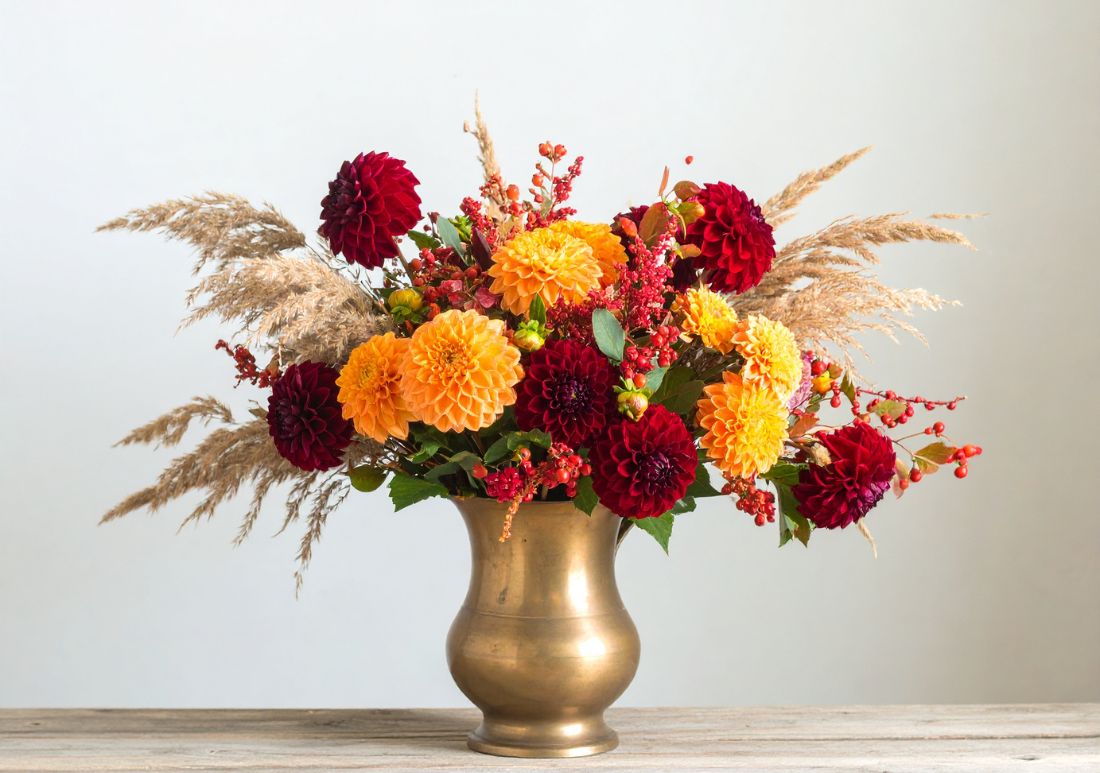
- Analogous Harmony: Choose colors that sit next to each other, such as warm oranges, amber tones, and deep reds, to evoke a cozy, comfortable mood.
Maximizing Visual Texture with a Seasonal Flower Mix
Relying on a single type of bloom can sometimes result in a flat, uninspiring display. To prevent this, focus on creating a diverse seasonal flower mix that combines varying shapes, sizes, and petal structures. Mixing round, focal flowers with spikey, linear blooms and delicate, airy fillers creates depth that draws the eye through the entire arrangement.| Dynamic Floral Components | Examples of Varied Bloom Shapes | Core Purpose in the Arrangement |
| Focal Flowers | Peonies, Garden Roses, Dahlias | Establish the primary color and anchor the visual weight |
| Linear Stems | Delphinium, Snapdragons, Gladiolus | Add height, define the outer boundary, and guide the eye upward |
| Texture Fillers | Thistle, Hypericum Berries, Waxflower | Fill empty pockets, break up solid colors, and add complexity |
| Airy Accents | Cosmos, Scabiosa, Ranunculus | Provide movement and create a light, natural finish |